
WHAT IS HYPERMOBILITY?
In short, hypermobility refers to an excessive range of motion in joints, often described as “loose joints” or “double-jointedness”. Hypermobility can occur in just one or two of the small joints (i.e. the thumbs), but is most often seen in several major joints spread throughout the body (i.e. the neck, knees, elbows, etc.). Widespread Hypermobility tends to run in families and is often due to genetic conditions or syndromes, such as Downs Syndrome, Marfan Syndromes, or Ehlers Danlos Syndrome.
WHAT IS EDS?
EDS (or Ehlers Danlos Syndrome) is a group of inherited disorders caused by altered genes that affect the body’s connective tissues like skin, joints, and blood vessels. Mutations can be inherited from a parent or occur spontaneously. There are at least 13 types of EDS, and the specific genetic cause is known for most types. Hypermobile type is among the most common types of EDS, estimated to affect as many as 1 in every 100 people, but the specific gene that causes hEDS has not yet been found. Symptoms can include joint hypermobility, fragile skin, and easy bruising. Signs and symptoms of the disorder depend on the type you have. While there is no cure, symptoms can be managed through physical therapy, occupational therapy, pain management, and genetic counseling.
WHAT ARE SYMPTOMS AND SIGNS OF HYPERMOBILITY & EDS?
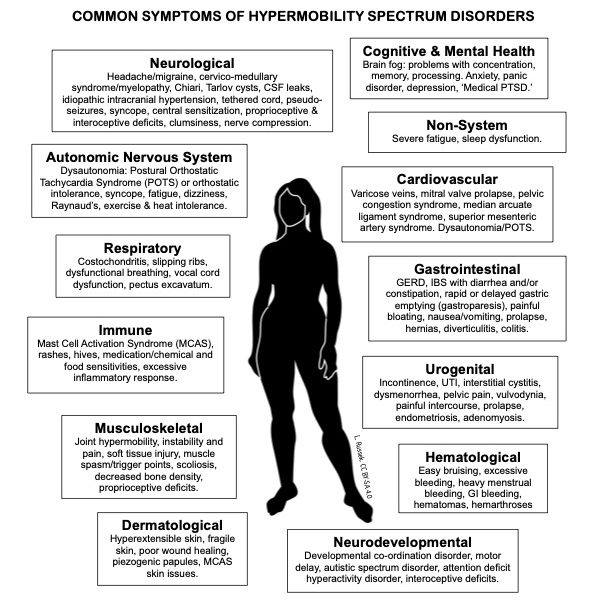
Signs & Symptoms of hypermobility and EDS depend on what type you have, along with other factors such as co-conditions or past injuries. Some people with hypermobility or EDS may have very few signs & symptoms, while others have several.
The signs and symptoms may include, but aren’t limited to:
– Abnormal Scarring
– Autism Spectrum/ADHD/AuDHD
– Chronic Joint or Muscle Pain
– Depression/Anxiety
– Easy Bruising
– Easy scarring and poor wound healing
– Frequent Headaches
– Fibromyalgia (Widespread & Chronic Musculoskeletal Pain in all Four Quadrants of the Body)
– Gastroparesis and/or other Gut Issues
– Joint Hypermobility (double-jointedness)
– Joint Instability/Dislocations and Subluxations
– MCAS (Mast Cell Activation Syndrome)
– ME/CFS (Myalgic Encephalomyelitis or Chronic Fatigue Syndrome)
– Menstrual Cycles that are Irregular, Extremely Heavy or Painful
– Prolapses/Hernias
– Sleep Disturbances/Insomnia
– Soft, velvety, and/or stretchy skin
– Thoracic Outlet Syndrome
– TMJ Dysfunction
– Vitamin Deficiencies
It’s important to remember you can have many or all of these signs and symptoms without having EDS or hypermobility. You can also have either EDS or hypermobility while exhibiting only a very few of these signs and symptoms.
HOW IS HYPERMOBILITY & EDS DIAGNOSED?
Diagnosis of Hypermobile Ehlers-Danlos Syndrome (hEDS):
hEDS is diagnosed based on a combination of clinical features and diagnostic tests.
Clinical Features:
- Generalized joint hypermobility (excessive range of motion in multiple joints)
- Soft, velvety, or stretchy skin
- Easy bruising
- Scarring that is thin, weak, or irregular
- Muscle weakness or pain
- Chronic fatigue
- Recurrent dislocations or subluxations
Diagnostic Tests:
- Physical examination: To assess joint mobility, skin texture, and other physical findings.
- Family history: A family history of hEDS or other connective tissue disorders is often present.
- Genetic testing: In some cases, genetic testing can confirm the diagnosis, but it is not always necessary. Blood tests are currently available for all EDS types except the hypermobile type.
- Imaging studies: X-rays or MRIs may be used to visualize joint abnormalities or spinal curvature.
DIAGNOSTIC CRITERIA –
The Brighton Revised Criteria for hEDS include the following:
- Joint hypermobility: A Beighton score of 6 or more in adults or 4 or more in children (see below for scoring)
- Two or more of the following systemic features:
- Chronic pain
- Easy bruising
- Skin hyperextensibility
- Soft tissue hernias
- Scoliosis or other spinal curvature
- Dislocations or subluxations
Beighton Score: 0-3: Normal, 4-5: Mild hypermobility, 6-9: Moderate hypermobility, and 10-12: Severe hypermobility.

Differential Diagnosis:
Other conditions that may present with similar symptoms include: Joint laxity syndrome, Marfan syndrome, Classical Ehlers-Danlos syndrome, and Osteogenesis imperfecta.
NOTE:
It is important to seek medical attention if you suspect you have hEDS, as early diagnosis and management can help prevent complications.
It is possible to have hypermobility without having hEDS.
The diagnosis of hypermobility and hEDS should only be made by a qualified healthcare professional.
HOW CAN MASSAGE HELP?
Massage can help hypermobility and EDS by easing muscle pain and tension, increasing blood flow to tight fascia, and reducing nerve pain through gentle techniques like direct compression, friction, and myofascial release. A qualified therapist will use techniques tailored to the individual, avoiding over-stretching and deep joint movements to prevent injury, while also providing relaxation and anxiety relief. A gentle, personalized approach is key to avoid worsening symptoms.
How massage helps:
- Reduces muscle tension: Hypermobility can cause muscles to become tight as they overcompensate to support loose joints. Massage helps relax these tight muscles.
- Promotes healthy fascia: It increases blood flow to the fascia, the connective tissue that can become a source of pain, helping to heal injuries and increase health.
- Eases nerve pain: Vibration techniques, like those from a massage gun, can stimulate nerves that transmit vibration, which can block pain signals.
- Reduces pain and improves joint stability: By relaxing muscles, massage can help activate and strengthen them, which improves their ability to support joints. Specialized Pain Creams, Lotions, or Oils may also help in reducing muscle pain and tightness.
- Reduces anxiety and promotes relaxation: The manual therapy can have a calming effect, reducing the sympathetic nervous system response that can lead to muscle tension and imbalances.
Important considerations:
Watch for contraindications: Avoid massage if you have certain conditions like deep vein thrombosis (DVT) or recent surgery, and always inform your therapist of any relevant health issues.
Work with a qualified therapist: Seek a therapist who understands hypermobility and EDS and can provide an individualized treatment plan.
Be gentle: Avoid deep tissue work unless specifically requested and tolerated. Gentle techniques are generally safer.
Communicate during the session: Provide feedback to your therapist about how your body feels. It is also helpful to note how you feel the next day.
Avoid overstretching: Therapists should avoid techniques that stretch the hypermobile tissue excessively. Gentle support is best if joints need to be moved.
Combine with other therapies: Massage is often most effective when used alongside other treatments like strengthening and mobility exercises, which builds muscle support and stability for loose joints.
ALWAYS consult your doctor/physician before starting any new exercises or medications/supplements. We are not medical professionals. While we can perform visual assessments under our scope of practice, we are not qualified to diagnosis any conditions nor prescribe any medications or treatments beyond what falls under our scope of practice as Massage Therapists. The information provided below is offered as a tool only. Please discuss any possible conditions, treatments or medications with a qualified medical professional.
EDS & Hypermobility Information Websites
The Bendy Bodies Podcast
The Ehlers Danlos Society
Hypermobility Syndromes Association
Supplements/Vitamins Many Find Useful
Please note it can take several months of consistent use to notice results. Discuss supplements with your doctor before use, as some supplements can potentially cause adverse reactions in sensitive individuals or interfere with medications.
B Complex – Aids in boosting energy, decreasing brain fog, improving mood, and more. Also addresses common MTHFR gene mutations in EDS.
Vitamin C – Vitamin C is essential for collagen production. It may help improve the body’s ability to synthesize and maintain healthy connective tissues, reduces bruising, and improves wound healing. Furthermore, it can help boost the immune system.
CoQ10 – May help with symptoms of fatigue, inflammation and muscle weakness. Reduces oxidative stress, helping with pain and fatigue. CoQ10 may help reduce brain fog by boosting mitochondrial energy production, reducing oxidative stress, and protecting brain cells. Studies suggest it can improve cognitive function, memory, and fatigue.
Glucosamine & Chondroitin: Supports cartilage repair, ligament strength, and joint mobility.
Vitamin D3 + K2 – According to research, those with hypermobility often have low Vitamin D levels. Vitamin D is crucial for bone health, immune function, muscle strength, and pain management – all of which are compromised in those with hEDS & HSD. K2 helps with the absorption of Vitamin D. We recommend buying a brand that includes these together.
Magnesiums Glycinate, Malate and Taurate – Plays a role in muscle function and relaxation. It may help reduce muscle tension, spasms and cramps that can accompany hypermobility. May also aid with improved sleep, reduced anxiety, heart health, and reduction in migraine, all of which often coexist with hypermobility syndromes.
Zinc – Plays a crucial role in collagen formation and connective tissue health.
Many clients/patients with hypermobility also find relief and/or a decrease in symptoms by eliminating or dramatically reducing gluten/wheat, dairy, and eggs, high-histamine foods, and nightshades, while adding in probiotic and prebiotic foods.
Antibiotics & Medications to AVOID
Individuals with Ehlers-Danlos syndrome (EDS), especially vascular type, should be cautious about fluoroquinolone antibiotics like Cipro and Levaquin due to an increased risk of serious side effects, including aortic rupture, tendon rupture, and other connective tissue damage. This is due to a combination of the condition itself increasing risk and the known side effects of the drug class. Patients should always inform their healthcare providers about their EDS diagnosis before starting any new antibiotic to ensure safer treatment options are considered first.
Fluoroquinolones to avoid:
- Ciprofloxacin (Cipro)
- Levofloxacin (Levaquin)
- Moxifloxacin
- Ofloxacin
Risks associated with these antibiotics:
- Aortic rupture or dissection: The FDA has warned that these antibiotics can increase the risk of tears or ruptures in the aorta, which can be fatal.
- Connective tissue damage: Fluoroquinolones have been linked to tendon rupture, nerve damage, and other musculoskeletal issues.
- Worsening of symptoms: Some individuals with EDS have reported that these antibiotics exacerbated their existing symptoms, such as hypermobility.
Important considerations:
Risk assessment: The risk of these severe side effects should be carefully weighed against the potential benefits of the antibiotic for a specific infection.
Inform your doctor: It is crucial to inform your healthcare provider of your EDS diagnosis before they prescribe any new medication, especially antibiotics.
Alternative antibiotics: Doctors should try to avoid fluoroquinolones and use alternative antibiotics if available to treat the infection.
Considerations for Anesthesia:
Local Anesthetics: While no anesthesia is strictly forbidden, patients with Ehlers Danlos Syndrome often show local anesthetic resistance (lidocaine may fail), requiring alternative, higher, or more frequent dosing.
Regional/Neuraxial Blocks: Use with caution due to risks of spinal hematoma, increased CSF leak, and potential for reduced efficacy. Ultrasound guidance is highly recommended.
Mast Cell Activation Syndrome (MCAS): Anesthetics that trigger histamine release should be used cautiously in patients with coexisting MCAS.
Advice, Information & Practitioners on Instagram:
@hypermobilitymd –
Mayo Clinic trained EDS, HSD, & MCAS expert with decades of experience
@hypermobility.therapist –
Support for hypermobility and co-conditions
@hypermobilitydoctor –
Online Physical Therapy, Personal Training & Consulting for Hypermobility Syndromes
@dr.melissakoehl.pt –
DPT & Pilates Instructor – Specialist in Hypermobility, EDS/HSD, POTS, MCAS & co-conditions
Low Impact, Low-Moderate Intensity Workouts on YouTube:
(We most recommend slow, gentle workouts starting at just 5-10 minutes a few days a week and increasing s-l-o-w-l-y according to tolerance levels. We like and recommend these channels, as their workouts are often low-to-moderate impact and medium intensity, while remaining short and doable. Again, begin slowly. If videos are longer, cut them in half. Listen to your body, and don’t push yourself too hard or overdo it. Allow yourself double the recovery time in-between workouts. A good place to start is 10-15 minutes, 2-3 days a week.)
@SeniorShape Fitness – Walking Cardio for Stability, Mobility, and Endurance
@Fabulous50s – Gentle Toning, strengthening, weight management, walking workouts for balance
@Get Fit with Rick – Walking/Steps/Zumba for cardio health, strength & balance
@HypermobilityTherapy – Providing joint hypermobility support to those with EDS & HDS
@HypermobileFriendlyWorkouts – Workouts specifically designed for people with Hypermobility, hEDS, POTS & co-conditions
Physical Therapy/Treatment
We currently recommend Megan Sims at Connect Pelvic Health in Acworth, as she is familiar with Ehlers Danlos Syndrome, Hypermobility, and the issues that often come with it. Many of her patients report feeling better after just 1-2 visits.
If you know of anyone able to diagnose and/or treat locally, please let us know so their information can be added to this page and passed on to our clients.

 Heaven Sent Massage of Ellijay
You must be logged in to post a comment.